Lucidchart is a web-based diagramming application that allows users to visually collaborate on drawing, revising and sharing charts and diagrams, and improve processes, systems, and organizational structures.
idchart is a powerful online diagramming tool that makes it easy to create ER diagrams. ER diagrams are used to model data and relationships between entities in a database. Lucidchart offers a wide range of features and benefits to help users create professional-looking diagrams quickly and easily.
Who Should Use Lucidchart?
Lucidchart is ideal for database administrators, software engineers, and business analysts who need to create ER diagrams. It is also a great tool for students and teachers who need to create diagrams for educational purposes.
Key Benefits and Features
Easy to use drag-and-drop interface
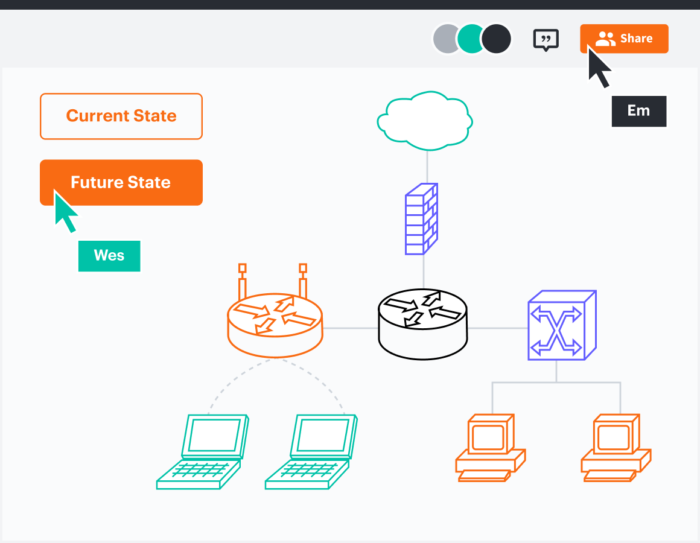
Real-time collaboration with colleagues
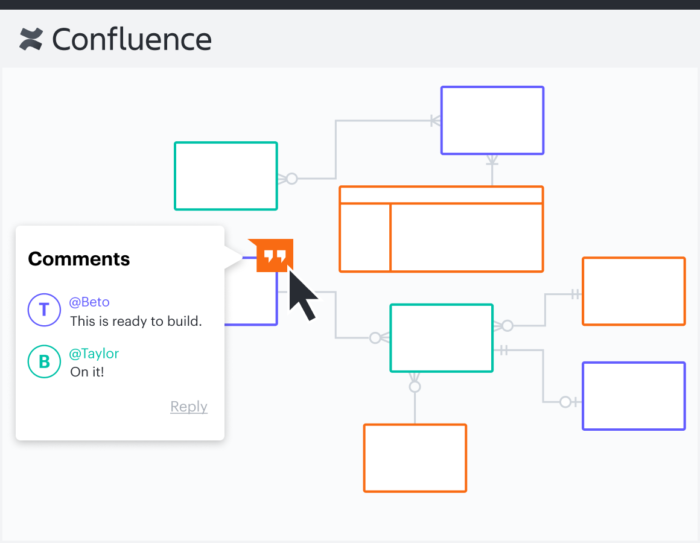
Integration with popular databases
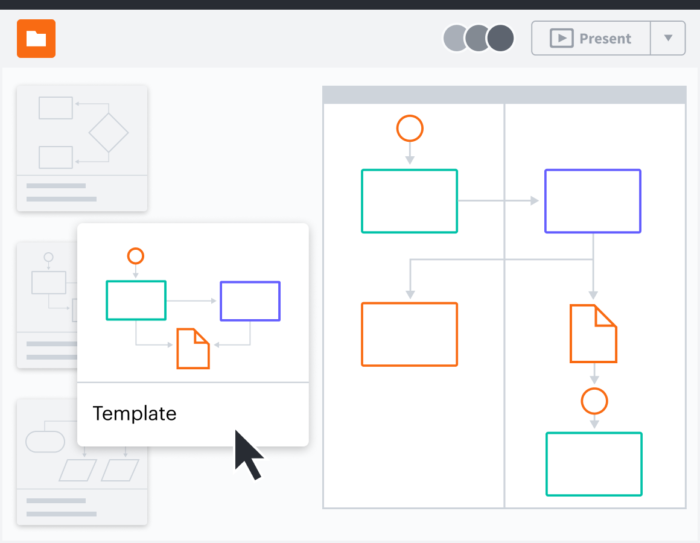
Hundreds of templates and shapes
Export diagrams to popular formats
How Does Lucidchart Compare to Competitors?
Lucidchart is one of the most popular ER diagramming tools on the market. It offers a wide range of features and benefits that make it stand out from the competition. It is easy to use, offers real-time collaboration, and integrates with popular databases. It also offers hundreds of templates and shapes to
Create a shared vision
Quickly visualize your team's processes, systems, and organizational structure. Intelligent diagramming lets you visualize complex ideas faster, clearer and more collaboratively.
Get everyone on the same page, literally
A common visual language accelerates collaboration and improves communication. It’s easier to align and stay aligned when everyone collaborates in the same space. Lucidchart makes it easy to involve the right people to make the right decisions.
Bring plans to life
Even the best ideas need help to become real. Lucidchart allows you to stay focused and sprint forward with purpose. Bring to life the plans that will propel your business.
Why you should get it
LucidChart allows businesses to create professional-quality diagrams, charts, and other visual aids that can help to communicate complex ideas and concepts more clearly. This can be especially useful for presentations, proposals, and other situations where visual aids can make a big impact.
With LucidChart, it is easy for multiple team members to work on a document at the same time, regardless of location. This can help to streamline the design and development process and ensure that projects are completed more efficiently.
LucidChart is compatible with a range of file formats, including Microsoft Office and Google Docs, which makes it easy to integrate into existing workflows.
LucidChart is designed to be user-friendly, with a range of templates and pre-designed elements to choose from. This can help to reduce the learning curve and make it easier for businesses to get started.
LucidChart allows businesses to fully customize their diagrams and charts to match their brand and aesthetic. This can help to create a more cohesive and professional image, which can be especially important for presentations and proposals.
LucidChart offers analytics tools that allow businesses to track the performance of their diagrams and charts, including metrics such as views and engagement. This can be useful for understanding the effectiveness of different visual aids.
LucidChart takes data security seriously and offers a range of measures to protect businesses from cyber threats.
LucidChart can be easily integrated with other tools and platforms, such as project management software and social media, which can make it easier to use in a variety of contexts.
LucidChart offers excellent customer support, with a knowledge base and customer service team available to help with any questions or issues.
LucidChart offers a range of pricing options, starting at $9.95 per month for a basic plan. This makes it an affordable option for businesses of all sizes.
Some things to consider
While LucidChart offers a range of pricing options, it may be more expensive than other diagramming or charting tools. This could be a barrier for some businesses, especially those on a tight budget.
For those who are new to diagramming or charting, there may be a learning curve involved in getting up to speed with LucidChart. It may take some time and effort to master the platform.
While LucidChart offers a lot of customization options, there may be some limitations compared to other platforms. This could be a problem for businesses that want highly unique or custom visual aids.
Help & Support
What is an ER diagram?
An ER diagram is a visual representation of data that describes how entities relate to one another. It is used to model the structure of a database and is often used in software engineering to design and document databases.
What is the purpose of an ER diagram?
The purpose of an ER diagram is to provide a visual representation of data that can be used to design and document databases. It is also used to model the structure of a database and to help identify relationships between entities.
What are the components of an ER diagram?
The components of an ER diagram include entities, attributes, relationships, and cardinality. Entities are the objects or concepts that are represented in the diagram, attributes are the properties of the entities, relationships are the connections between entities, and cardinality is the number of instances of one entity that can be related to another.
How do I create an ER diagram?
Creating an ER diagram is easy with Lucidchart. Simply sign up for a free account and start creating your diagram. You can add entities, attributes, relationships, and cardinality to your diagram and customize it to fit your needs.
What are the benefits of using Lucidchart for ER diagrams?
Lucidchart makes it easy to create and share ER diagrams. You can quickly create diagrams with our intuitive drag-and-drop interface, and you can easily share your diagrams with others. Plus, Lucidchart is cloud-based, so you can access your diagrams from anywhere.
Webflow
Build your site for free and take as long as you need. (That’s right, no trial here.) Just add a site plan for more pages, and a custom domain when you’re ready for the world.
Free until you’re ready to launch
Set up lightning-fast managed hosting in just a few clicks.
Build website interactions and animations visually.
Define your own content structure, and design with real data.
Edit and update site content right on the page.
Optimize your website with controls, hosting, and flexible tools.
Goodbye templates and code — design your store visually.
Tested to work across all modern browsers, so you don’t need to waste time testing and bug fixing after design.
Expand the power of Webflow by adding custom code on the page, in the <head>, or before the </head> of any page.
Download a ZIP of all your HTML, CSS, JavaScript, images, and other assets on our paid plans.
Integrate marketing tools, collect form data, store backups, and more.
Let clients and colleagues update content with an intuitive Editor.
Publish to a world-class hosting stack that can handle any traffic you throw at it. Backed by SSL and ISO 27018 compliance for peace of mind.
Publish straight to the web, or hand off clean code and update every instance of a color in one edit.
Why you should get it
With Webflow, business owners have the ability to fully customize their websites to match their brand and aesthetic. This can help to create a more cohesive and professional image, which can attract more customers.
Responsive design: With more and more people accessing the internet on their phones, it is important to have a website that is mobile-friendly. Webflow allows businesses to easily create responsive designs that look great on any device.
By using Webflow, businesses can create a smoother and more intuitive user experience for their visitors. This can help to increase customer satisfaction and reduce bounce rates.
Webflow allows businesses to easily optimize their websites for search engines, which can help them to rank higher in search results and attract more organic traffic.
If a business is looking to sell products or services online, Webflow offers a range of e-commerce functionality that can make it easy to set up and manage an online store.
With Webflow, it is easy for multiple team members to work on a website at the same time. This can help to streamline the design and development process and ensure that projects are completed more efficiently.
Webflow offers hosting services, which means that businesses don't have to worry about finding a separate hosting provider. This can save time and money.
Webflow provides in-depth analytics tools that allow businesses to track their website's performance and make data-driven decisions about their marketing and design strategies.
Webflow takes website security seriously, and offers a range of measures to protect businesses from cyber threats.
Webflow offers excellent customer support, with a knowledge base and customer service team available to help with any questions or issues.
Some things to consider
While Webflow offers a range of pricing options, it may be more expensive than other website building platforms. This could be a barrier for some businesses, especially those on a tight budget.
For those who are new to website building, there may be a learning curve involved in getting up to speed with Webflow. It may take some time and effort to master the platform.
Limited customization: While Webflow offers a lot of customization options, there may be some limitations compared to other platforms. This could be a problem for businesses that want a highly unique or custom website.
If a business builds their website using Webflow, they may become dependent on the platform for updates and maintenance. If something goes wrong with Webflow, it could have a negative impact on the business's website.