Compare Gliffy and MiroComparison | |
|---|---|
GliffyGliffy is an online diagramming tool that allows users to create professional-looking diagrams, flowcharts, and ER diagrams. Find out more |  MiroThe online collaborative whiteboard platform to bring teams together, anytime, anywhere. Find out more |
| Try Gliffy | Try Miro |
| Why you should consider it | |
|---|---|
|
|
| What are the benefits? | |
|
|
| Things to look out for | |
| |
| Who is it for? | |
|
|
| Features | |
Business Analysts
Keep up to date about Collaboration offers like Gliffy
PrivacyGliffy
Gliffy is an online diagramming tool that allows users to create professional-looking diagrams, flowcharts, and ER diagrams. It is designed to be easy to use and accessible to users of all skill levels. Gliffy is a great tool for businesses, students, and professionals who need to create diagrams quickly and easily.
Key Benefits and Features
Gliffy offers a wide range of features to help users create diagrams quickly and easily. It has a drag-and-drop interface, a library of shapes and symbols, and a wide range of templates to choose from. Gliffy also offers collaboration tools, allowing users to work together on diagrams in real-time.
Who Should Use Gliffy?
Gliffy is a great tool for businesses, students, and professionals who need to create diagrams quickly and easily. It is also a great tool for those who need to collaborate on diagrams with others.
How Does Gliffy Compare to Its Competitors?
- Gliffy is easy to use and accessible to users of all skill levels.
- It has a drag-and-drop interface, a library of shapes and symbols, and a wide range of templates to choose from.
- Gliffy also offers collaboration tools, allowing users to work together on diagrams in real-time.
- Gliffy is more affordable than many of its competitors.
Help & Support
- What is an ER diagram?
- An ER diagram is a visual representation of data that describes how entities relate to one another. It is used to model the structure of a database and is often used in software engineering to design and document databases.
- What is Gliffy's ER diagram tool?
- Gliffy's ER diagram tool is a powerful, easy-to-use online diagramming tool that allows you to quickly create professional-looking ER diagrams. It includes a library of shapes and symbols, as well as a drag-and-drop interface for easy diagramming.
- What features does Gliffy's ER diagram tool offer?
- Gliffy's ER diagram tool offers a library of shapes and symbols, drag-and-drop interface, and the ability to easily share and collaborate on diagrams. It also offers a variety of customization options, such as color, line style, and font size.
- How do I create an ER diagram with Gliffy?
- Creating an ER diagram with Gliffy is easy. Simply select the shapes and symbols you need from the library, drag and drop them onto the canvas, and customize them to your liking. You can then share and collaborate on your diagram with others.
- Can I export my ER diagram from Gliffy?
- Yes, you can export your ER diagram from Gliffy in a variety of formats, including PNG, JPG, SVG, and PDF.
- What is an ER diagram?
- An ER diagram is a visual representation of data that describes how entities relate to one another. It is used to model the structure of a database and is often used in software engineering to design and document databases.
- What is the purpose of an ER diagram?
- The purpose of an ER diagram is to provide a visual representation of data that can be used to design and document databases. It is also used to model the structure of a database and to help identify relationships between entities.
- What are the benefits of using Gliffy for ER diagrams?
- Gliffy is a powerful and easy-to-use diagramming tool that makes it easy to create professional-looking ER diagrams. It also offers a wide range of features, such as the ability to add text, shapes, and images to your diagrams, as well as the ability to share and collaborate with others.
- How do I create an ER diagram with Gliffy?
- Creating an ER diagram with Gliffy is easy. Simply select the ER diagram template from the Gliffy library, and then drag and drop shapes and lines to create your diagram. You can also add text, shapes, and images to your diagram to make it more informative and visually appealing.
- Can I share my ER diagrams with others?
- Yes, you can easily share your ER diagrams with others using Gliffy. You can share your diagrams with others via a link, or you can invite them to collaborate on your diagram directly from the Gliffy platform.
- What is an ER diagram?
- An ER diagram is a visual representation of data that describes how entities relate to one another. It is used to model the structure of a database and is often used in software engineering to design and document databases.
- What is the purpose of an ER diagram?
- The purpose of an ER diagram is to provide a visual representation of data that can be used to design and document databases. It is also used to model the structure of a database and to help identify relationships between entities.
- What are the benefits of using Gliffy for ER diagrams?
- Gliffy is a powerful and easy-to-use diagramming tool that makes it easy to create professional-looking ER diagrams. It also offers a wide range of features, such as the ability to add text, shapes, and images to your diagrams, as well as the ability to share and collaborate with others.
- How do I create an ER diagram with Gliffy?
- Creating an ER diagram with Gliffy is easy. Simply select the ER diagram template from the Gliffy library, and then drag and drop shapes and lines to create your diagram. You can also add text, shapes, and images to your diagram to make it more informative and visually appealing.
- What features does Gliffy offer for ER diagrams?
- Gliffy offers a wide range of features for creating ER diagrams, including the ability to add text, shapes, and images to your diagrams, as well as the ability to share and collaborate with others. It also offers a library of templates to help you get started quickly and easily.
Miro
Miro is an online collaborative whiteboard platform that enables teams to work together remotely. It provides a virtual space for teams to brainstorm, collaborate, and share ideas in real-time.
The platform offers a range of features, including an infinite canvas, sticky notes, and a library of templates. It also allows users to embed videos, images, and documents, as well as integrate with other tools such as Slack, Dropbox, and Google Drive.
Who Uses Miro?
Miro is used by teams of all sizes, from small startups to large enterprises. It is particularly popular with product teams, designers, marketers, and remote teams. It is also used by educators and students for online learning and collaboration.
Work together, wherever you workIn the office, remote, or a mix of the two, with Miro, your team can connect, collaborate, and co-create in one space no matter where you are. |  |
Connect your tools, | 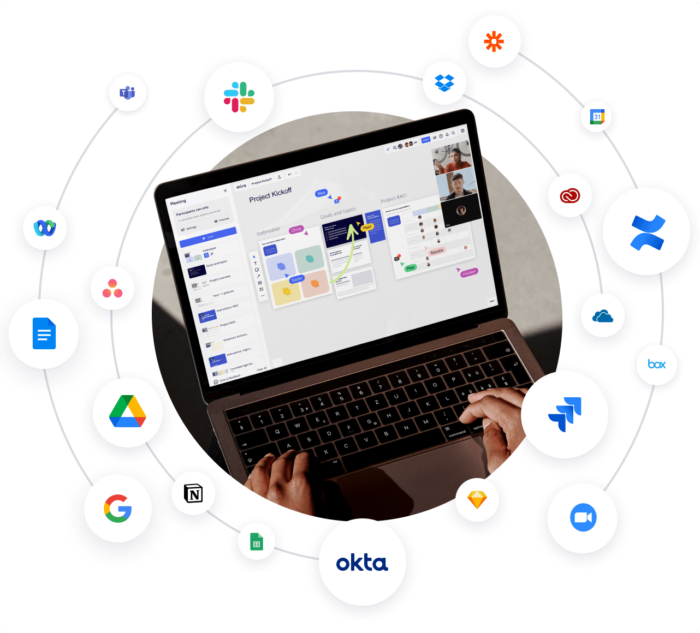 |
BrainstormingUnleash creative ideas and build on them with the help of sticky notes, images, mind maps, videos, drawing capabilities — the list goes on. | 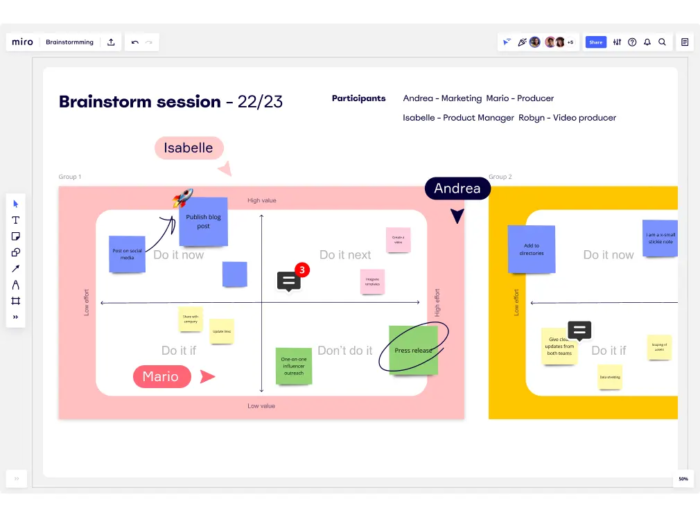 |
DiagrammingFlowcharts, Swimlanes, Strategic Planning — tap into one of our many diagrams to visualize projects and ideas of any scope. | 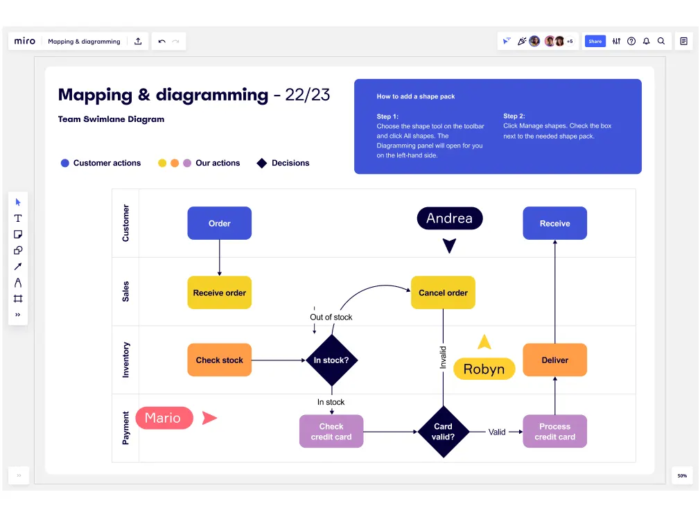 |
Meetings & WorkshopsGive everyone in the room — even if they're miles away — a chance to connect and interact with sticky notes, voting, live reactions, and icebreakers. | 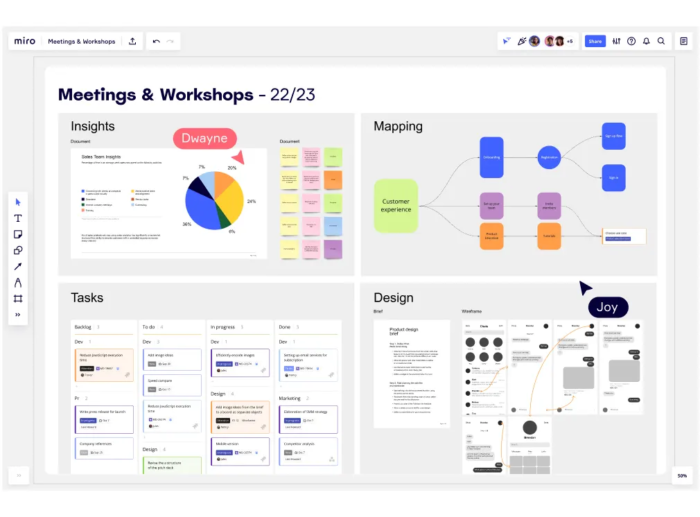 |
MappingPlan projects, map out information architecture, or create org charts — you can plot it all in minutes on a Miro board. | 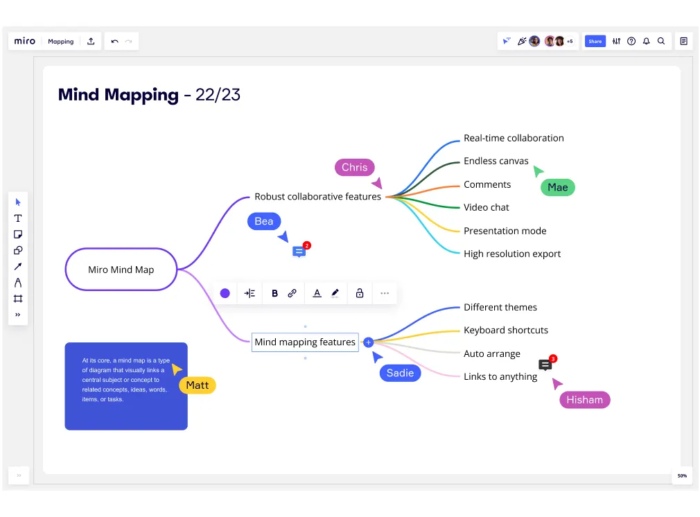 |
Research & DesignFoster a customer-centric mindset and build a shared team space, where everyone can capture insights, structure them with diagrams and tables, and share it all in a central spot. | 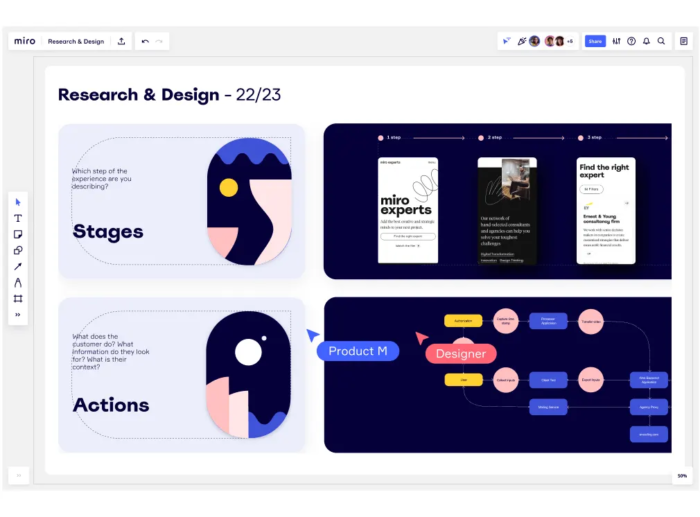 |
Help & Support
- What is Miro?
- Miro is an online collaborative whiteboard platform that enables distributed teams to work effectively together, from brainstorming with digital sticky notes to planning and managing agile workflows.
- What features does Miro offer?
- Miro offers a wide range of features, including real-time collaboration, an infinite canvas, customizable templates, integration with popular tools, and more.
- How do I get started with Miro?
- Getting started with Miro is easy. Just sign up for a free account and you can start creating boards right away. You can also explore our tutorials and resources to learn more about how to use Miro.
- What type of files can I upload to Miro?
- Miro supports a wide range of file types, including images, videos, PDFs, and more. You can also integrate with popular tools like Dropbox, Google Drive, and Box to upload files directly to Miro.
- Does Miro offer a mobile app?
- Yes, Miro offers a mobile app for both iOS and Android devices. The app allows you to access and collaborate on your boards from anywhere.
- Does Miro offer customer support?
- Yes, Miro offers customer support via email and live chat. You can also find helpful tutorials and resources in our Help Center.
- What is Miro?
- Miro is an online collaborative whiteboard platform that enables distributed teams to work effectively together, from brainstorming with digital sticky notes to planning and managing agile workflows.
- What features does Miro offer?
- Miro offers a wide range of features, including real-time collaboration, an infinite canvas, customizable templates, integration with popular tools, and more.
- How do I get started with Miro?
- Getting started with Miro is easy. Just sign up for a free account and you can start creating boards right away. You can also explore our tutorials and resources to learn more about how to use Miro.
- What type of files can I upload to Miro?
- Miro supports a wide range of file types, including images, videos, PDFs, and more. You can also integrate with popular tools like Dropbox, Google Drive, and Box to upload files directly to Miro.
- Does Miro offer a mobile app?
- Yes, Miro offers a mobile app for both iOS and Android devices. The app allows you to access and collaborate on your boards from anywhere.
- Does Miro offer customer support?
- Yes, Miro offers customer support via email and live chat. You can also find helpful tutorials and resources in our Help Center.